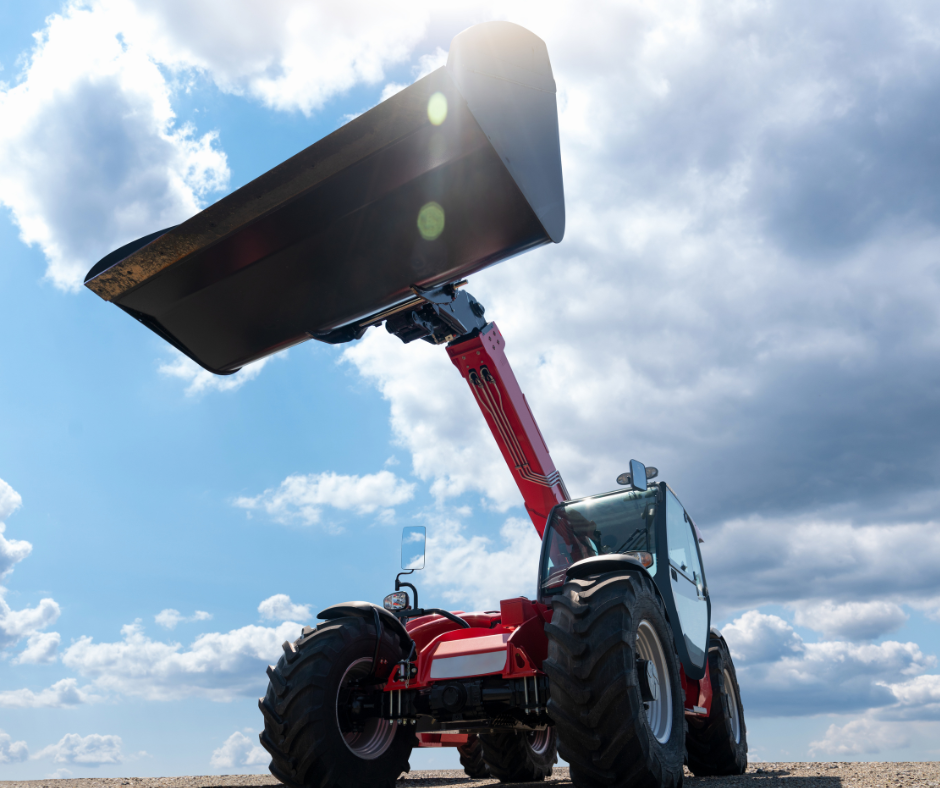
Tractors used to be the number one piece of machinery on most farms, it holds a special place in farming culture. Perhaps it was a fixture on the family farm growing up, or maybe it was a shared obsession over big machines. Whilst the good old tractor has been the most reliable machine to assist with manual tasks over the years, it has been super passed by the improved technology of the telehandler.
There are a number of reasons why we are seeing a common trend of telehandlers replacing tractors. Their versatile attachments suit multiple tasks, moving feed, unloading pallets, and yes stacking hay bales.
With these additional abilities, its easy to see how productivity levels are on the rise. When compared to a forklift, telehandlers offer a high-load capacity, lifting heavier loads to greater heights over longer distances. Without having to change machines, workers get more done in less time.
Telehandlers are the ideal machine for tight spaces and uneven surfaces often found when feeding livestock or lifting and loading. Providing four-wheel drive capabilities, telehandlers are as comfortable off road as they are on it with the right operator.
Playing such a large role in the Fodder Industry, we’ve chosen to address the top 10 hazards when operating a telehandler to hopefully keep you and your workers safe.
1. Overturning or Tipping
2. Site conditions
3. Electrocution
4. Struck by a telehandler
5. Falling material
6. Damaged machinery and attachments
7. Unsafe work procedures
8. Work platforms
9. Incompatible attachments
10. Unexpected movement
Learn how to manage these hazards here